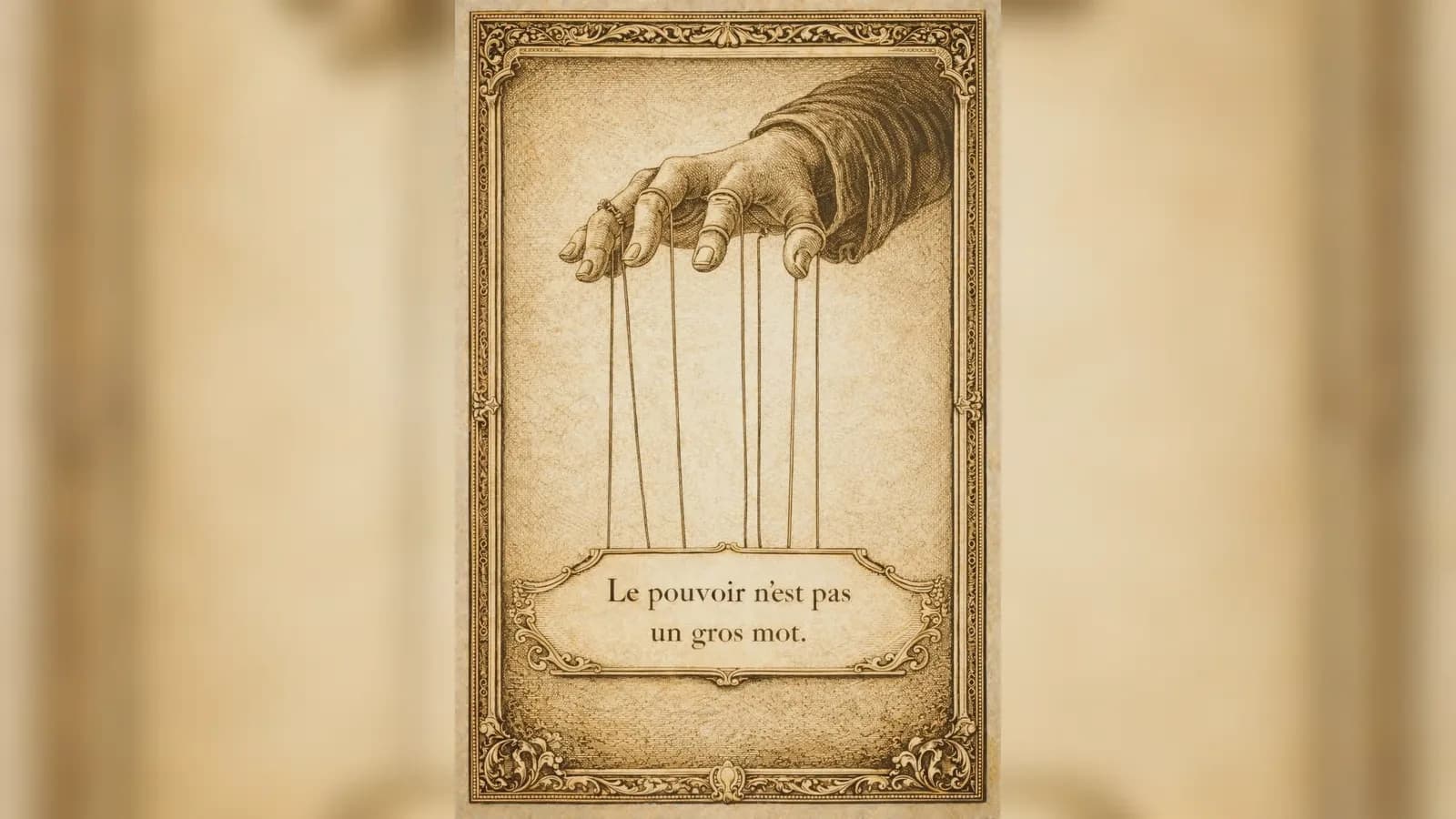
In organizations, some topics circulate easily: cooperation, leadership, culture, collective intelligence. Another, just as central, is often carefully avoided: power.
As if the word were inherently toxic. As if it applied only to a handful of dominants. As if refusing to name it could somehow make it disappear.
That is a comforting mistake. It is still a mistake.
Power is not a dirty word
Every collective form of action produces a system of power. Not because individuals are morally suspect, but because cooperation always involves two realities at once:
- mutual dependence, since no one acts entirely alone;
- unequal distributions of resources, information, and room for maneuver.
In other words, power is not an accident of collective life. It is one of its operating conditions.
What power means inside an organization
Put simply, A has power over B if A can lead B to do something B would not have done without A’s intervention. Power is therefore a capacity to modify another person’s conduct.
Inside an organization, that also includes the ability to become indispensable, to control a zone of uncertainty, or to carry more weight in the negotiations that make coordination possible.
This matters: power is not a personal trait that someone simply possesses once and for all. It exists only within a relationship.
That means it is:
- relative, because it depends on the situation;
- unstable, because it cannot be permanently stockpiled;
- recognized, because it requires some form of acknowledgment from others;
- non-transitive, because A may hold power over B without holding it over C.
The cost of leaving power implicit
Ignoring power does not make it disappear. It simply makes it more opaque, which also makes it harder to regulate.
To understand a real organization, rather than its formal org chart, you have to look at:
- where resources and constraints come from;
- how dependence is structured;
- which conflicts emerge around the rules of the game;
- what each actor can gain, lose, protect, or block.
When power goes unexamined, structural tensions are misread as personal ones. Psychological explanations get applied where it would be more accurate to read power relations, asymmetries, and implicit rules.
In your organization, is power being thought through, or merely endured?
The article helps frame the question. The assessment helps reveal which herotype actually leads when pressure, constraint, and trade-offs become real.